Overview
Pathways to the Future: Transportation 2050 is the Richmond region's long range transportation plan (LRTP). It outlines significant transportation needs across the region through the year 2050, covering all nine localities and travel modes. This plan is a dynamic document that not only sets a vision and goals for regional transportation but also prioritizes projects based on these goals.
As a fiscally constrained plan, it includes financial strategies to show how the proposed transportation improvements can be implemented. PlanRVA creates a 25-year plan and updates it every five years, per federal mandate.
For the 2050 update, we continue the vision from the last plan: The transportation system in the Richmond region will reliably and safely connect people, provide opportunities for all to thrive and live healthy lives, promote a strong economy, and respect conservation of natural resources.
Draft Plan Review: July 29-August 27
See all the pieces together and provide comment on the review of the Draft Plan.
Final Investment Scenario Result
At our last stage, we shared four investment scenarios with our implementing project champions (locality staff and operators) and the broader community to gather their input.
In the final consensus scenario, we have a total of:
- 121 projects
- Valued of approx. $7.9 billion
On April 23rd, 2026, the Richmond Region Transportation Planning Organization (RRTPO) Policy Board adopted a transportation investment package reflecting both public feedback and locality representative LRTP advisory workgroup input.
View the LRTP board presentation and meeting recording for additional information and to hear public comment.
Read more about the process of getting to the
Consensus Scenario in the News Updates Section.
How much money are we talking about?
There is a set budget for all federal investments for the region: $32.5 billion.
First, we must "remove"...
approximately 57%: for maintaining and operating the existing system (e.g. repaving, fixing busses)
approximately 13%: allocations to our member local governments and transit operators for local-level projects (e.g. sidewalks, roundabouts, bus replacements). We don't dictate what it is used for.
That leaves about $9.5 billion for regional money. Some of that is already allocated for projects that are currently being built.
This gives us $7.9 billion out of the total $32.5 billion to plan for projects for 25 years from now (e.g. high capacity, of regional significance).
This is what we can use to make up the 4 investment scenario packages you were able to weigh in on before the final.
Each was semi-equivalent across mode (roadway, transit, bike/pedestrian), which is the intent of our benefit scoring that we use for all projects.
Tell me more about scenarios
See our FAQ
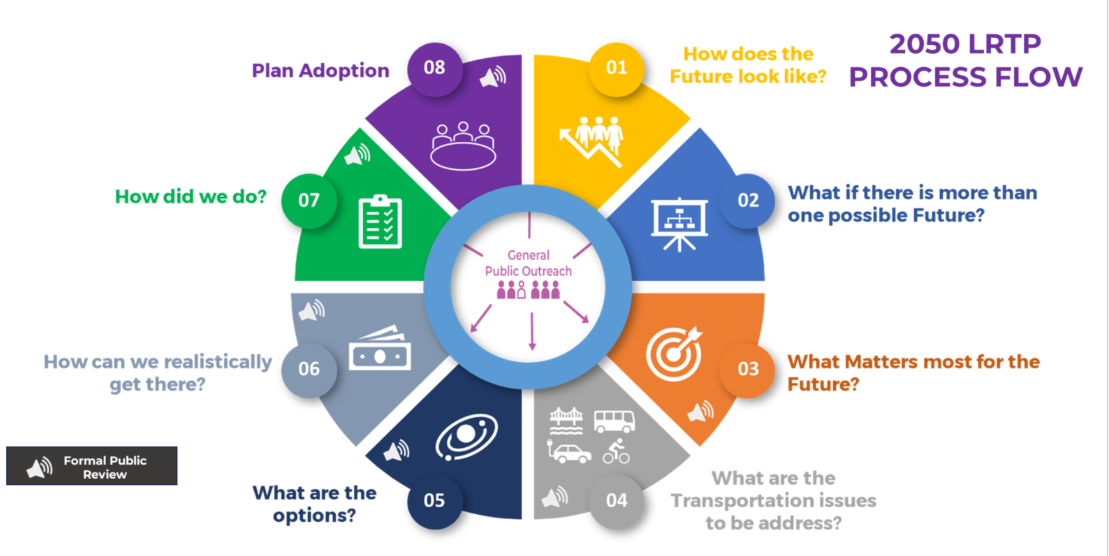
Process that takes place over two years of the update period. This 2050 update will be complete Fall 2026.
Completed Input
Overall Input Snapshot
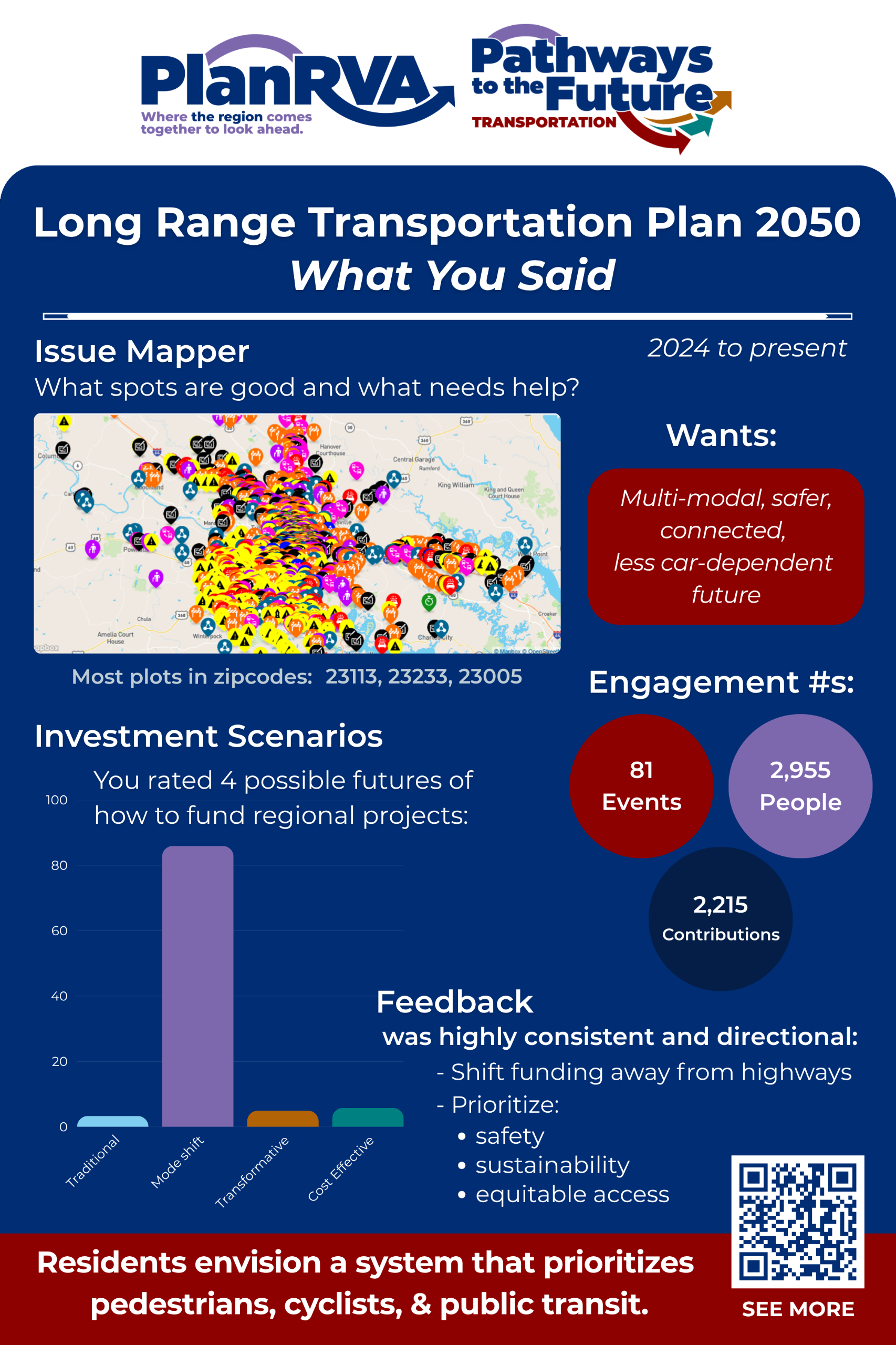
High level overview of the input from the past 2 major engagement periods.
Investment Scenarios Input
From March 11 - April 17, 2026, we shared with the public information about constrained plan funding options, the scenarios and projects contained in each, and asked for widespread feedback, including any preference for one or more packages.
We engaged with 1083 members of the public at 31 events across our region.
We asked the public to:
- View the 4 Proposed Scenario packages and maps
- View a list of projects by Scenario
- See all the projects in a map
- Read the goals definitions
Respondent Data on Investment Scenarios
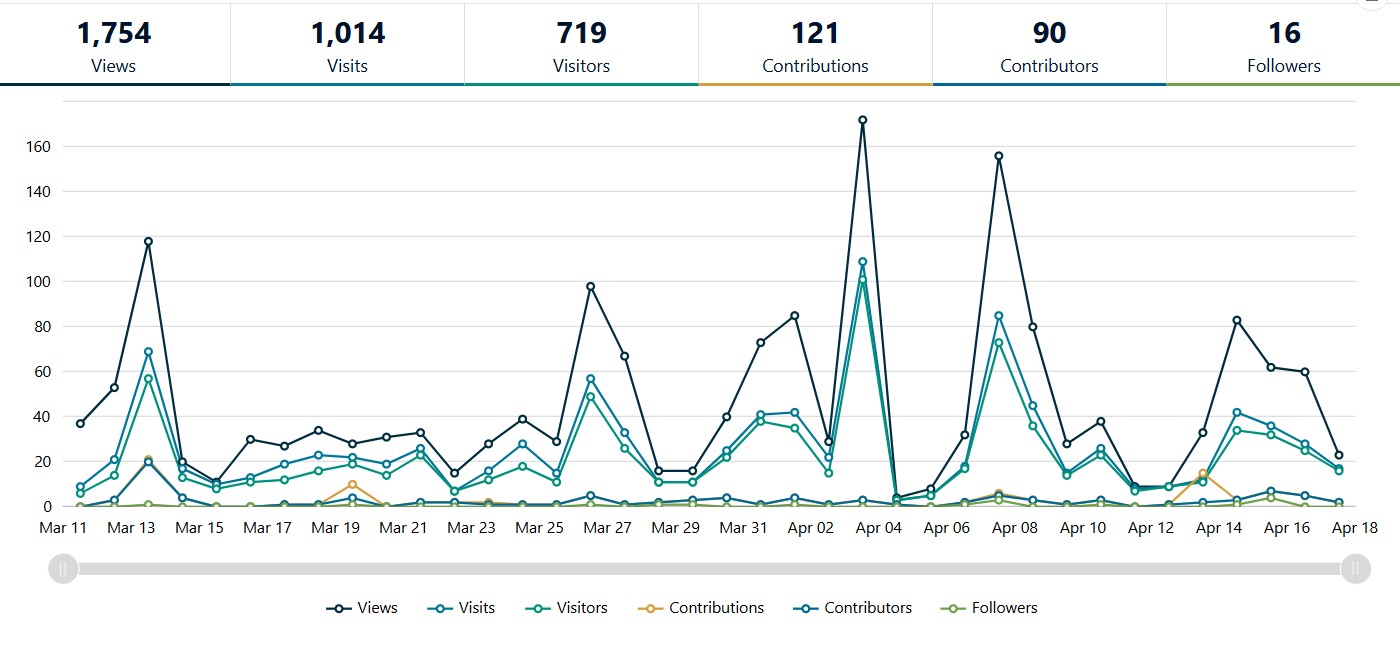
We invite you to review the respondent data summary report showing engagement during this second, investment scenario phase, where 204 comments were received via 121 form contributions submitted by 90 residents across the region.
Investment Scenario Input
- Engagement Summary Report
- Submitted Public Comments*(via form) *comments appear as submitted by contributors. They have not been altered and may contain views or language that could be offensive to some.
Below are a few at-a-glance data points. The full report includes additional features that could be of interest.
-
-
Where Respondents Live
-
Where Respondents Work
-
Respondent Age
-
Respondent Income
-
Respondent Ethnicity
Regional Goals
These regional goals were open for public comment from July 1 - July 15, 2025. This input went to the Richmond Regional Transportation Policy Board meeting on August 7.
These are the suggested GOALS for the Long Range Transportation Plan, the system of regional transportation infrastructure for the year 2050. They have been developed by subject matters experts from across the region and by staff, who have reviewed historic and current data, locality comprehensive plans, and input from the public.

Goal A-Safe
CLOSED: This discussion has concluded.
Does this feel like the right goal? Are these some of the ways we can get there?
Goal B-Clean
CLOSED: This discussion has concluded.
Does this feel like the right goal? Are these some of the activities that will accomplish it?
Goal C-Consistent
CLOSED: This discussion has concluded.
Does this feel right? Are these the ways we might get there?
Goal D-Prepared
CLOSED: This discussion has concluded.
Does this feel directionally sound? What is missing?
FAQ
FAQ
Pathways to the Future: Transportation 2050 is Richmond region’s Long-Range Transportation Plan (LRTP) which will be used to guide planning and decision making on multimodal transportation issues and needs through the year 2050. PlanRVA develops this long-range strategy to guide the effective investment of public funds for multi-modal transportation infrastructure throughout the Richmond Region.
The plan is federally mandated to cover at least the next 20 years. PlanRVA creates a 25-year plan and updates it every five years. The plan will consider fairness in all transportation spending and planning decisions in the region with a focus on transportation under-resourced communities.
There will be multiple stages and ways to give input over the next 2 years.
You can also provide input by participating in public meetings or events, completing future surveys, or sharing your ideas with us through the engagement site. Please follow the project on this site.
If you know of a community who should be connected to this work, please share their info with us at Ask a Question.
Richmond Connects is the City of Richmond's strategic plan for prioritizing multimodal transportation projects. Pathways to the Future: Transportation 2050 is a regional plan that covers not just the city but also the town of Ashland and the counties of Charles City, Chesterfield, Goochland, Hanover, Henrico, New Kent, and Powhatan.
PlanRVA staff will evaluate and incorporate input from the recommendations from Richmond Connects and other local transportation or comprehensive plans, incorporating those with regional importance into Pathways to the Future: Transportation 2050.
Alongside PlanRVA staff, the Long-Range Transportation Plan Advisory Workgroup (LRTP-AWG) will lead the creation of the plan, making independent decisions to direct the process and its results. The group includes representatives from localities, regional, state, and federal transportation partners, environmental, and community advocates from the region.
PlanRVA: created by the Virginia General Assembly in 1969, coordinates and plans for the Richmond region’s future. It manages regional programs in community development, emergency management, the environment, and transportation.
Metropolitan Planning Organization (MPO): a federally- required organization that plans transportation in urban areas with populations over 50,000 and receives federal funding.
Richmond Regional Transportation Planning Organization (RRTPO): The RRTPO is the federally recognized MPO for the Richmond region, supported by staffing infrastructure from PlanRVA.
Central Virginia Transportation Authority (CVTA): Established in 2020, CVTA funds transportation priorities in the region with staffing infrastructure from PlanRVA.
Planning Horizon: time frame considered in a plan. For example, the long-range transportation plan Pathways to the Future: Transportation 2050 looks ahead to the year 2050.
Fiscally Constrained: projects we can reasonably fund between now and 2050.
Travel Demand Model: technical tool used to predict and anticipate the level of use a road will have in the future. Projects usually address congestion like park and ride or HOV lanes.
Majority of Need
The majority of identified transportation needs are on highways (roadways classified as arterials and above). This reflects the reality that on the whole, the majority of current trips in our region happen on roads. Arterial = bigger roads, i.e. interstate, Powhite, major roads (360, 250, 33, 60) that connect region to region.
Freight
The vast majority of freight (movement of goods) happens on roadways. We have a responsibility to keep those users safe and the supply chain moving in the most efficient way possible.
We’re funding all/nearly all the transit/multimodal projects proposed.
In all the 4 scenarios, we would be funding every project proposed to us (meeting all or nearly all the overall needs) in transit/bike/ped. There are fewer of those than highway overall.
BRT (Bus Rapid Transit) expansions of 4-5 corridors are in all scenarios.
What’s in Highway?
For Safety: “Highway” issues don’t just consist of capacity changes. Often, the studies identify needs for improved interchanges or technology to reduce crashes. Safety improvements are a priority in those highway projects.
For Multimodal: There is still a multimodal component to highway. Many “highway improvements” also include sidewalk, pedestrian signaling, and bike lane installations. Additionally, addressing highway congestion actually makes transit operate more efficiently. For example, fixing bottlenecks on a major corridor by changing capacity also improves the reliability of the regional bus systems that share those same roads.
Why is some multimodal in highway? They are broad, so there is no way to divide costs to that small of a level AND because it hasn’t been designed yet.
Regionally Significant
Projects in this constrained plan are large, regionally significant projects like Bus Rapid Transit, highway expansions, and major regional trails, things which significantly change the way we travel in the region. It isn’t looking at smaller projects at all (which are often sidewalk, bike/ped). We do set aside money for that, as noted on the language on the engage page overview:
approximately 13%: allocations to our member local governments and transit operators for local-level projects (e.g. sidewalks, roundabouts, bus replacements). We don't dictate what it is used for.
Restricted Funding Source
A large chunk of our regional funding comes through VDOT and Federal Highway Administration, which is only for highway improvement (and some of is flexible and can include bike and pedestrian).
Big Picture: this is only $7.9B of the $32.5B after most was set aside for Operation & Maintenance, smaller projects across all modes, and multimodal investments we have already committed to as a region.
Toolkit
Download items needed to share about this effort
We'd love your help spreading the word so that more voices are heard. Would you share with your neighborhood association, house of worship, school, or community group? Images coming soon for the last stage of our input.
- Print a flier to hang in your group's space
- Post to your social media and tag @planrva
-
How to Translate This Page
-
Consensus Package Fb/LinkedIn Graphic
-
Consensus Package Instagram Graphic
-
Consensus Package Summary Image
-
LRTP 2050 Draft Plan Review